
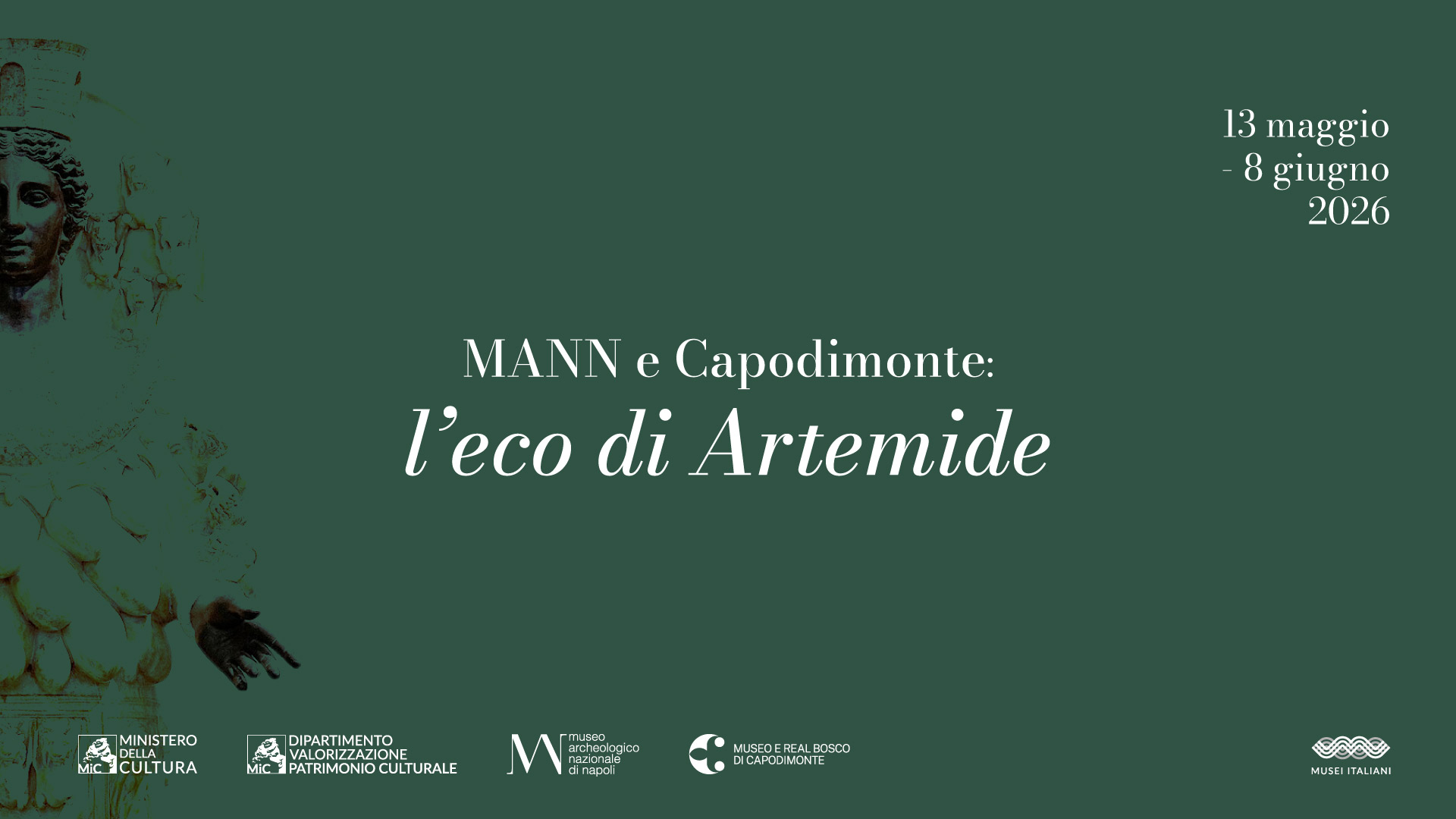
On display at the MANN a preview of a biscuit porcelain by Filippo Tagliolini, which has recently been acquired by the Ministry of Culture for the Museo e Real Bosco di Capodimonte, inspired to the famous statue from the Farnese collection, portraying the Artemis of Ephesus.
In the entrance hall of the Museum, two works of art start a dialogue across the centuries: the famous ancient statue of the Ephesian Artemis (2nd century AD) is displayed together with the porcelain it inspired in the 18th century, ‘The sacrifice to Diana of Ephesus’ (around 1790) by Filippo Tagliolini, a precious biscuit which has recently entered Capodimonte collections.
The Museo archeologico nazionale di Napoli and the Museo e Real Bosco di Capodimonte evoke a piece of a shared story, and, more specifically, they underline the ties between Farnese antiquities and the Real Fabbrica di Napoli. Indeed, in the Royal porcelain Manufactory of Naples, initially located in the Royal Palace at Portici and later moved to the Royal Palace in the capital city of the Kingdom, craftsmen had the opportunity to see, draw and copy ancient masterpieces which, sometimes, were reproduced or remodelled through the precious unglazed porcelain, known as biscuit. The Ephesian Artemis could be admired there as well, as testified by a witness, the scholar Carlo Gastone della Torre di Rezzonico, who wrote in the18th century “…in a large room, where many young men were painting porcelain, I admired […] an Ephesian Diana, namely the multi-breasted Nature, the most beautiful of all; the hands, the feet and the head are in bronze; the body, so full of animals and symbols, is made of alabaster.”
It is likely that the sculptor and ceramist Filippo Tagliolini, the master of the Real fabbrica Ferdinandea, saw it there. In the biscuit exhibited as a preview at the Museum, the goddess is accompanied by three offering figures, including a winged genius. Similar variations are frequent in the production of the Royal Manufactory of Naples, often inspired by ancient sculptures and artefacts, both those from the Farnese collection and from the excavations of Herculaneum and Pompeii.
The Ephesian Artemis statue, in alabaster, belongs to the first 16th century’s core of the Farnese collection, arrived in Naples from Rome by sea in the last decades of the 18th century, as part of the heritage passed on to Charles of Bourbon from his mother Elizabeth Farnese.
Before being transferred to Naples, the sculptures of the collection underwent a general restoration. For this occasion, the sculptor Giuseppe Valadier created the missing head, feet, and hands for the Artemis in painted bronze. The latter, damaged during the French occupation, were reinstated in 1805, upon the Farnese Collection’s transfer to the Nuovo Museo dei Vecchi Studi in Naples, which would have become today’s MANN.
The sculpture belongs to a group of numerous replicas, dating to the 2nd century AD, of the cult statue from the temple of Artemis at Ephesus, in present-day Turkey. The goddess wears a tight, stiff overdress, a kind of apron (ependytes in Greek), decorated with animals, and a disc-shaped collar featuring winged female figures and zodiac symbols. Rounded elements arranged in multiple rows hang from the bust: traditionally identified as breasts, they are instead interpreted as the scrotums of bulls offered to the goddess. In the temple of Ephesus, the original image of the goddess, ruler of nature and guarantor of the cosmic order, was probably an archaic wooden sculpture (xoanonin in Greek), adorned with clothes and jewels.