



An incredibile opportunity to get to know the Museum through a series of videos: more than 40 works of art to explore, organized in a single youtube playlist.
Available in Italian
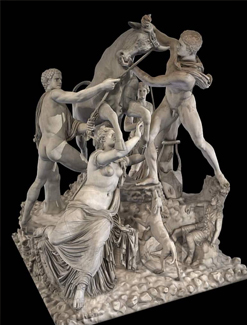
The scans are part of the project that intertwines the research on the color of ancient marble sculptures promoted by “MANN in Colors” and the technologies made available by the US company Flyover Zone.
E.LIS.A.
The journey begins with the history of the Museum, which served various purposes before becoming an exhibition space. It then continues with the two main collection cores:
-
The Farnese Collection, inherited by Charles of Bourbon from his mother, Elisabetta Farnese.
-
The Pompeian Collections, so named because the exhibited artifacts come primarily from Pompeii, though they also include exquisite findings from other Vesuvian sites such as Herculaneum, Boscoreale, and Stabiae.
The Farnese Collection of Roman sculptures and gems is located in the right wing of the ground floor and houses some of the MANN’s most significant masterpieces.
The Pompeian itinerary is spread across three different floors:
-
Ground Floor: Sculpture.
-
First Floor (Left Wing): Mosaics and the Secret Cabinet (Gabinetto Segreto) collection.
-
Second Floor (Left Wing): Everyday objects and frescoes.
-
Second Floor (Right Wing): The collection dedicated to the finds from the Villa of the Papyri in Herculaneum, featuring a rich display of bronze and marble statues.
The video guide also includes the Magna Graecia collection, which traces the historical and cultural phenomena of Greek colonization in Southern Italy, from the late 8th century BC until the Roman conquest in the 3rd century BC. The 14 rooms of this collection feature original Roman floors; for this reason, an additional ticket is required for the provision of mandatory shoe covers.
Finally, the Egyptian Collection, located in the basement, is organized into five thematic sections exploring key aspects of Egyptian civilization: the sphere of power, the world of the dead, cults and magic, and socio-economic organization.
Enjoy your visit!